Last Updated on May 27, 2025 by SA Surf Tours
Great White Sharks: 3 Reasons to Rethink Your Fear
The Great White Shark (Carcharodon carcharias) is often labelled one of the ocean’s most dangerous predators. Popular culture and sensational media coverage have long fuelled fear around this species – but are these fears justified?
As a South African surf travel company, we regularly hear from international surfers who are hesitant to paddle out in our waters. Their number-one concern? Sharks—especially Great Whites.
Yes, Great White Sharks live in South African waters, but that doesn’t mean they pose the kind of threat people imagine. In fact, there’s a lot of myth mixed in with reality when it comes to this iconic apex predator.
Here are three powerful reasons to reconsider your fear of Great White Sharks—and appreciate them for the majestic creatures they really are.
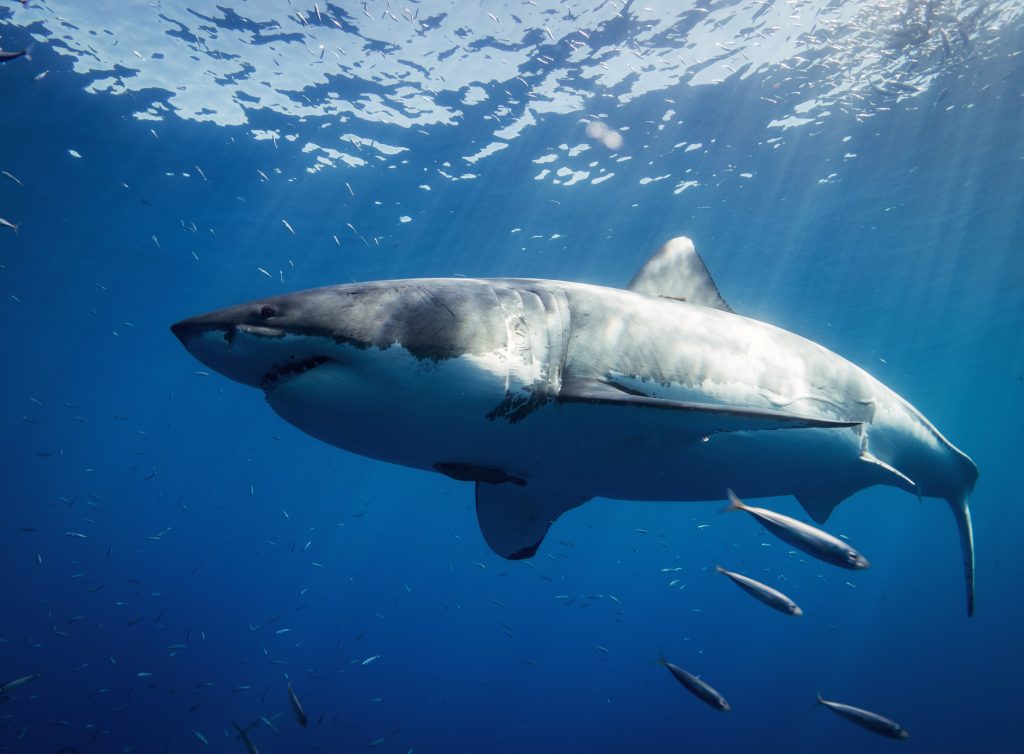
1. You’re More Likely to Be Killed by a Coconut Than a Great White Shark
It’s true – falling coconuts kill more people each year than sharks do. So do champagne corks, cows, and even vending machines. Your odds of being attacked by a Great White Shark are less than 1 in 3.75 million, according to the International Shark Attack File.
So why are we more afraid of a creature we’re statistically unlikely to even encounter?
A lot of it comes down to misunderstanding and media hype. In reality, surfers can significantly reduce their risk by paying attention to environmental conditions. For example, if there’s a lot of sea life activity – like seals, dolphins, or bait balls – we simply move to a quieter spot. Awareness is key.
Refusing to surf in Great White Shark habitats is like avoiding a tropical vacation because of coconuts. It’s an overreaction to a misunderstood threat.
2. We’re a Bigger Threat to Great White Sharks Than They Are to Us
Great White Sharks are more endangered than dangerous.
Humans kill an estimated 100 million sharks every year, mainly for their fins, which are used in traditional medicine and cuisine. Many species, including the Great White, are now considered vulnerable on the IUCN Red List.
Overfishing, accidental bycatch, and habitat loss are pushing these animals toward extinction. Compared to the number of human-shark incidents (which are rare and mostly non-fatal), the scale of damage we do to sharks is staggering.
Preserving Great White Shark habitats is vital not just for the species, but for marine ecosystems as a whole. As apex predators, sharks help maintain healthy populations of fish and marine life, which supports biodiversity and balance in the ocean.
3. Humans Are Not on the Menu
Despite what the movie Jaws might suggest, humans are not a preferred meal for Great White Sharks.
Why? We’re simply not fatty enough. Mature Great Whites primarily feed on seals, sea lions, and small whales – animals with thick layers of blubber. Humans don’t offer the high-energy payoff they’re after.
Most shark bites are cases of mistaken identity, often occurring in murky water. A shark may investigate a swimmer or surfer with a bite, but quickly retreats once it realises we’re not what it’s looking for. This explains why many bites are not fatal.
So, while no one wants to be bitten by a shark, it’s comforting to know that Great White Sharks aren’t actively hunting us – and never have been.
Fun Facts About Great White Sharks
- Great White Sharks are the largest predatory fish on Earth. The average adult is about 4.6 metres long.
- The biggest Great White Shark ever recorded was nicknamed “Deep Blue,” estimated to be over 6.1 metres (20 feet) long and weighing more than 2,000 kilograms. Other giants have been recorded in Cuba, Western Australia, and Prince Edward Island.
- Great Whites have existed for over 11 million years, making them one of the ocean’s most ancient predators.
- Their sense of smell is incredibly powerful – they can detect a colony of seals from over two miles away.
- When a female gives birth, she produces up to ten pups – and shows zero maternal care. The pups are born fully capable of swimming away to fend for themselves.
Great White Shark Habitat: Where Do They Live?
Great White Sharks are found in coastal and offshore waters in temperate zones around the world. Common Great White Shark habitats include:
- The coasts of South Africa, Australia, California, and New Zealand
- The North Atlantic, especially around Cape Cod and the Mediterranean Sea
- Isla Guadalupe in Mexico, a hotspot for shark diving
They prefer cooler waters and are often spotted near seal colonies, their primary food source. South Africa’s False Bay and Gansbaai are world-famous locations for observing these creatures in the wild.
Final Thoughts: Why We Should Respect, Not Fear, the Great White Shark
Yes, Great White Sharks are powerful predators – but they are also misunderstood, vulnerable, and ecologically essential.
Next time you head into the ocean, think of the Great White Shark not as a villain, but as a vital part of the marine ecosystem. Learn more, stay aware, and respect their space. You’re more likely to witness their beauty from a distance than ever face a threat.
Key Takeaways
- Great White Sharks rarely attack humans and don’t see us as prey.
- They’re far more endangered than they are dangerous.
- Understanding their behaviour and habitat can help prevent rare encounters.
- The biggest Great White Shark ever recorded exceeded 6 metres in length.
- Preserving shark populations is essential for ocean health.
Bonus Insight: Great White Sharks Are Crucial for Ocean Health
One of the most overlooked aspects of Great White Shark conservation is their critical role in maintaining the balance of marine ecosystems. As apex predators, Great Whites help regulate the populations of other species, which in turn supports the health and biodiversity of the ocean.
According to research published by the Smithsonian Ocean Portal, when shark populations decline, it can trigger a cascade of negative effects. For example, the overpopulation of mid-level predators can lead to the depletion of species further down the food chain, including commercially important fish.
“The loss of sharks can lead to the collapse of entire marine food webs,” explains the Smithsonian. “This has already been observed in several regions where shark populations have declined dramatically.”
Source: Smithsonian Ocean Portal – Sharks
By protecting Great White Shark habitats and ensuring the survival of these top predators, we’re also safeguarding the health of our oceans – a resource that supports millions of people around the globe through food, climate regulation, and economic activity.
Planning a surf trip to South Africa?
Learn how we keep our surfers safe while respecting local wildlife. Explore our South Africa Surf Tours for guided experiences in shark-conscious surf zones.
Frequently Asked Questions
Are Great White Sharks aggressive to humans?
Great White Sharks are not naturally aggressive toward humans. Most encounters occur because the shark mistakes a human for its natural prey, such as a seal. In these cases, the shark typically takes a single bite and then retreats once it realizes the mistake. Fatal attacks are extremely rare.
Does South Africa have Great White Sharks?
Yes, South Africa is one of the most well-known regions for Great White Sharks. Coastal areas like False Bay, Gansbaai, and Mossel Bay are notable Great White Shark habitats, attracting researchers and tourists alike. These areas are also managed with safety measures for ocean users.