Last Updated on April 17, 2025 by SA Surf Tours
Surfing is for the soul
Discover the physical, mental, and emotional benefits of riding waves—and why you might never want to stop.
Surfing may not have ancient roots like wrestling or athletics from Ancient Greece, but it’s fast becoming one of the most powerful ways to reconnect with both nature and yourself. In today’s world, where more people are realising the importance of physical activity for mental health, surfing offers something unique: a full-body workout, a mental reset, and an emotional high—all wrapped up in one ride.
Whether you’re chasing the perfect barrel or just starting with whitewash waves on a foamie, surfing offers more than just fun—it becomes a lifestyle. So what is it that gets people hooked on surfing? Let’s dive in.
Why Surfing Is Good for Your Mental and Physical Health
Being immersed in nature has a proven effect on our wellbeing. Numerous studies have shown that time spent outdoors, particularly near water, can significantly reduce stress, improve mood, and boost overall mental health source: Frontiers in Psychology.
Surfing combines that nature immersion with cardiovascular activity, balance training, and strength building. You’re not just getting fit—you’re aligning your body with natural rhythms. When you’re out there riding waves, surrounded by the ocean’s energy, something shifts internally. You connect with something deeper—your spirit, the water, the present moment.
That combination of movement, mindfulness, and nature is what makes surfing one of the most addictive and life-enhancing sports out there.
Getting Started: How to Start Surfing and Why It Hooks You
So how does the journey begin? For most, it starts out playfully—bodyboarding at the beach with friends, falling a lot, laughing even more. Then, something magical happens. One clean ride, one moment in the barrel, one glide along the face of a wave—and boom. You’re hooked.
That was my story. I still remember my first proper barrel on a bodyboard—it lasted maybe two seconds, but it felt like forever. Something in my consciousness changed. From that moment on, I knew how I wanted to spend my free time: chasing more barrels.
Surfing Progression: From Bodyboarding to Stand-Up
After years of bodyboarding and exploring coastlines, I learned that different waves suit different boards. Eventually, I transitioned into stand-up surfing—a new challenge altogether. Bigger boards, more technique, and a much steeper learning curve.
Unlike bodyboarding, stand-up surfing demands serious upper-body strength for paddling, core control for popping up, and precise balance to ride the wave. You have to read the ocean, know when to paddle, and commit fully to the ride.
This progression is part of the addiction—it’s never boring. You’re always learning, always improving, always adapting.
Why Surfing Becomes a Lifestyle
The beauty of surfing is that it offers more than a workout. It gives you a tribe, a connection to the elements, and a deep sense of presence. A 2020 study from Global Environmental Change even refers to “blue health”—the positive health benefits from being near or in water—as a key factor in long-term wellbeing source.
Surfing nurtures this. It strengthens not only your body, but your social life, your spirit, and your joy. You laugh, shout, wipe out, and celebrate wins—with friends who get just as stoked as you do.
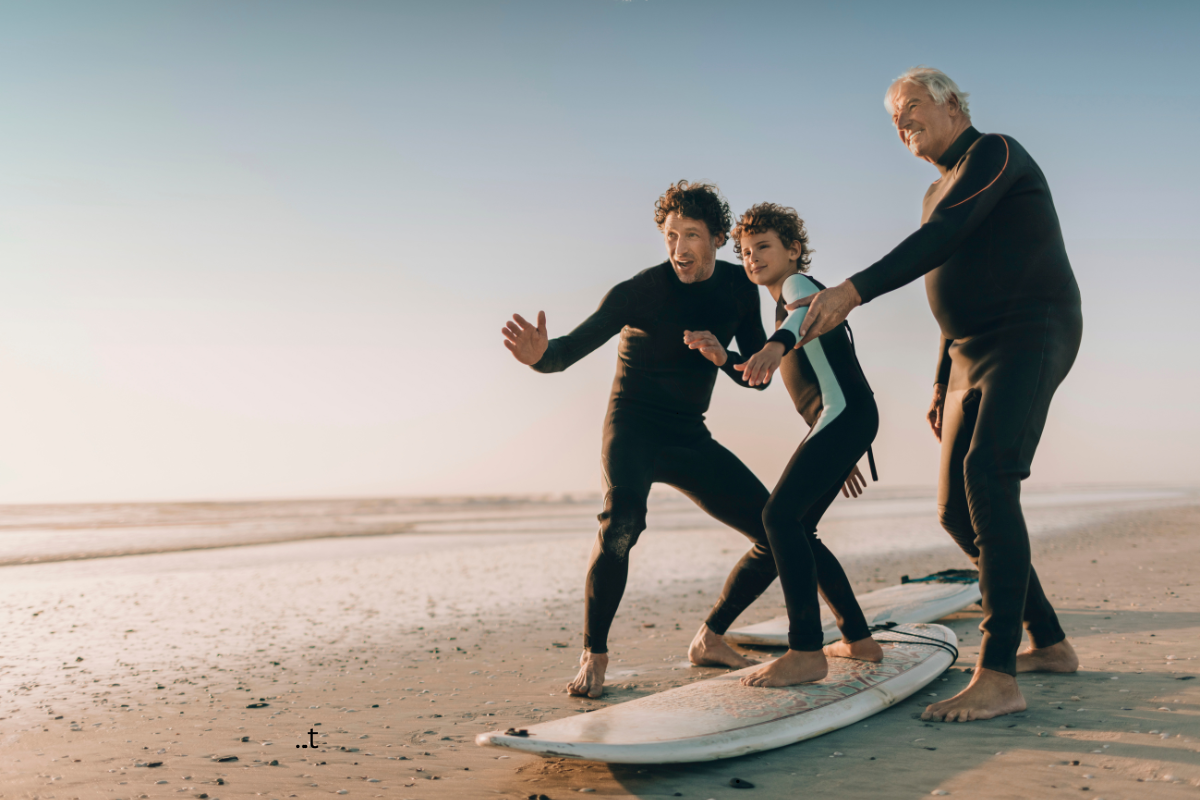
And it’s inclusive. From toddlers riding soft tops with their parents to retirees catching shore breaks on bodyboards, surfing is for all ages. You can be a weekend warrior or dedicate your life to mastering massive waves like Kelly Slater—who’s still charging into his 50s.
Surfing and Longevity
One of the most compelling things about surfing is that it’s sustainable for life. As long as you prioritise your health and adjust your style with age, you can keep surfing well into your later years. Research supports that staying active in the ocean contributes to long-term cardiovascular health and mobility source: Harvard Health.
In fact, it’s the holistic nature of surfing—physical, emotional, spiritual—that makes it more than a sport. It becomes a way of life.
Final Thoughts: Surfing Is the Art of Being Present
To wrap up, I’ll leave you with this timeless quote from Timothy Leary, which sums it all up beautifully:
“Surfers are the ‘throw-aheads’ of mankind, not the dregs; they aren’t the black sheep of humanity, but the futurists… The act of the ride is the epitome of ‘be here now’, and the tube ride is the most acute form of that. Your future is right ahead of you, the past is exploding behind you… It’s a non-productive, non-depletive act that’s done purely for the value of the dance itself. And that is the destiny of man.”
So if you’re wondering how to get hooked on surfing—try it once, feel that glide, catch that wave—and you’ll understand.
• Surfing boosts mental health, builds physical strength, and fosters connection with nature.
• Everyone can surf—from toddlers to retirees.
• You’ll get hooked when you experience your first unforgettable ride.
• Surfing can become a lifestyle, offering joy, community, and long-term health benefits.